

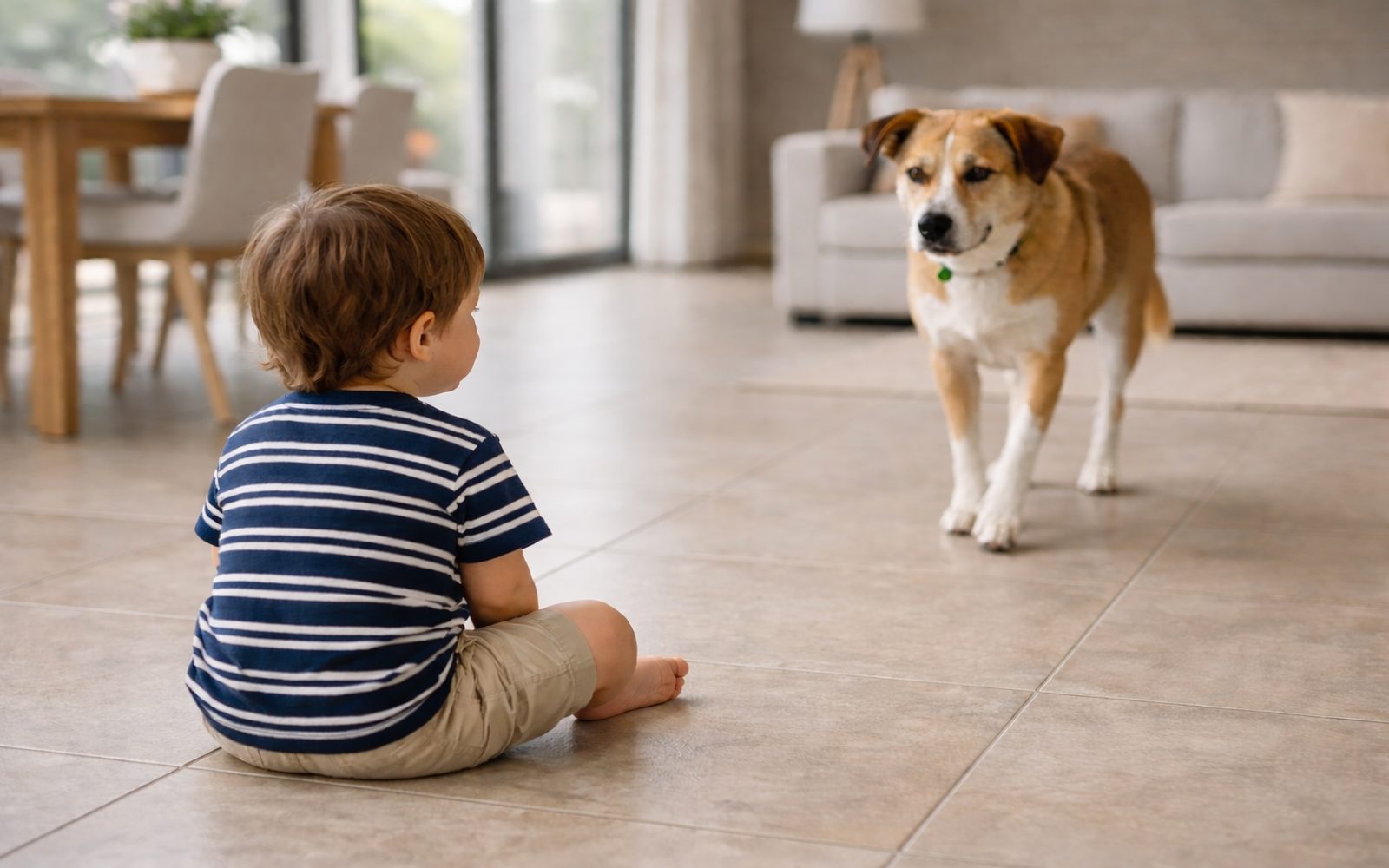
Tile flooring is a smart choice for busy households thanks to its durability, moisture resistance, and easy maintenance. In homes with kids running through hallways and pets racing from room to room, however, safety matters just as much as appearance. One of the most overlooked factors when choosing tile is slip resistance. Slip ratings help explain how much traction a tile provides under real-world conditions, especially in spaces where spills, wet paws, and humidity are part of daily life.
What slip ratings are designed to measure
Slip ratings exist to estimate how resistant a flooring surface is to slipping when walked on. Modern tile standards focus on real movement rather than standing still, which is far more useful for active households. Instead of relying on outdated static measurements, most tile today is evaluated using a Dynamic Coefficient of Friction value, commonly referred to as DCOF.
This measurement reflects how much resistance a surface provides when a foot is already in motion, which closely mirrors everyday scenarios in kitchens, bathrooms, and entryways.
Making sense of DCOF numbers without the confusion
DCOF values are shown as decimals, such as 0.42 or higher. In simple terms, higher numbers indicate greater traction. For interior residential spaces that may occasionally get wet, a DCOF of 0.42 or above is widely recommended.
This guideline is especially relevant in family homes where spills happen quickly and unexpectedly. Kitchens, hallways near exterior doors, and laundry rooms all benefit from tile surfaces that maintain grip even when moisture is present.
Why finish type plays a major role in safety
Tile finish has a direct impact on how a floor feels underfoot. Polished and glossy tiles are visually striking, but they tend to become slick when water is introduced. For households with kids and pets, this can increase the risk of slips during everyday activities.
Matte and lightly textured tiles generally provide better traction while still delivering a refined, high-end look. When comparing finishes, reviewing guidance from resources that explain tile performance characteristics—such as this detailed overview of tile flooring slip resistance and performance—helps clarify which surfaces are better suited for active living.
Texture and grout lines affect traction more than expected
Slip resistance is not just about finish. Surface texture, tile size, and grout spacing all influence how a floor performs. Subtle texture can improve grip without making the tile feel rough or industrial. Smaller tiles with more grout lines can also enhance traction, particularly in bathrooms and wet areas.
Grout joints create natural breaks in the surface, helping reduce the sliding sensation that can occur on large, smooth tiles. This is one reason why mosaic or smaller-format tiles are commonly used on shower floors and bathroom spaces.
How pets experience tile floors differently
Pets interact with flooring in unique ways. Dogs rely heavily on traction from their back legs, especially when running or turning quickly. Smooth tile surfaces can cause slipping, which may lead to joint strain over time, particularly for older pets.
Choosing tile with appropriate slip ratings helps pets move more confidently through the home. Many homeowners browsing tile options prioritize textures that support pet mobility without trapping dirt or hair, striking a balance between comfort and cleanliness.
Moisture-prone areas deserve extra attention
Bathrooms, entryways, and laundry rooms are the most common locations for slips to occur. These spaces experience regular exposure to water, making slip resistance a critical consideration. Selecting tile with higher traction in these areas can significantly reduce everyday risks.
Extending similar finishes into adjacent spaces can also improve overall safety while maintaining visual continuity throughout the home.
Maintenance habits that preserve slip resistance
Even tile with strong slip ratings can become slick if residue builds up on the surface. Certain cleaners leave behind films that reduce traction over time. Using manufacturer-recommended cleaning products and avoiding waxy finishes helps maintain the original performance of the tile.
Routine cleaning not only keeps floors looking good but also ensures they continue to perform as intended in high-traffic family spaces.
Choosing tile that supports both safety and style
Slip ratings should be viewed as one part of the decision-making process, alongside durability, design, and maintenance needs. Modern tile collections offer a wide range of finishes and styles that meet safety guidelines without compromising aesthetics.
With thoughtful selection and proper installation, tile flooring can provide long-lasting beauty while supporting safer movement for kids, pets, and everyone in between.
Schedule a consultation or request samples
We are a family-owned flooring company serving Semmes, Mobile, Daphne, Fairhope, Orange Beach, Panama City Beach, Santa Rosa Beach, and Destin. Our flooring experts help homeowners choose tile flooring that balances slip resistance, durability, and everyday safety for homes with kids and pets. To schedule a consultation or request samples, visit our contact page.


