

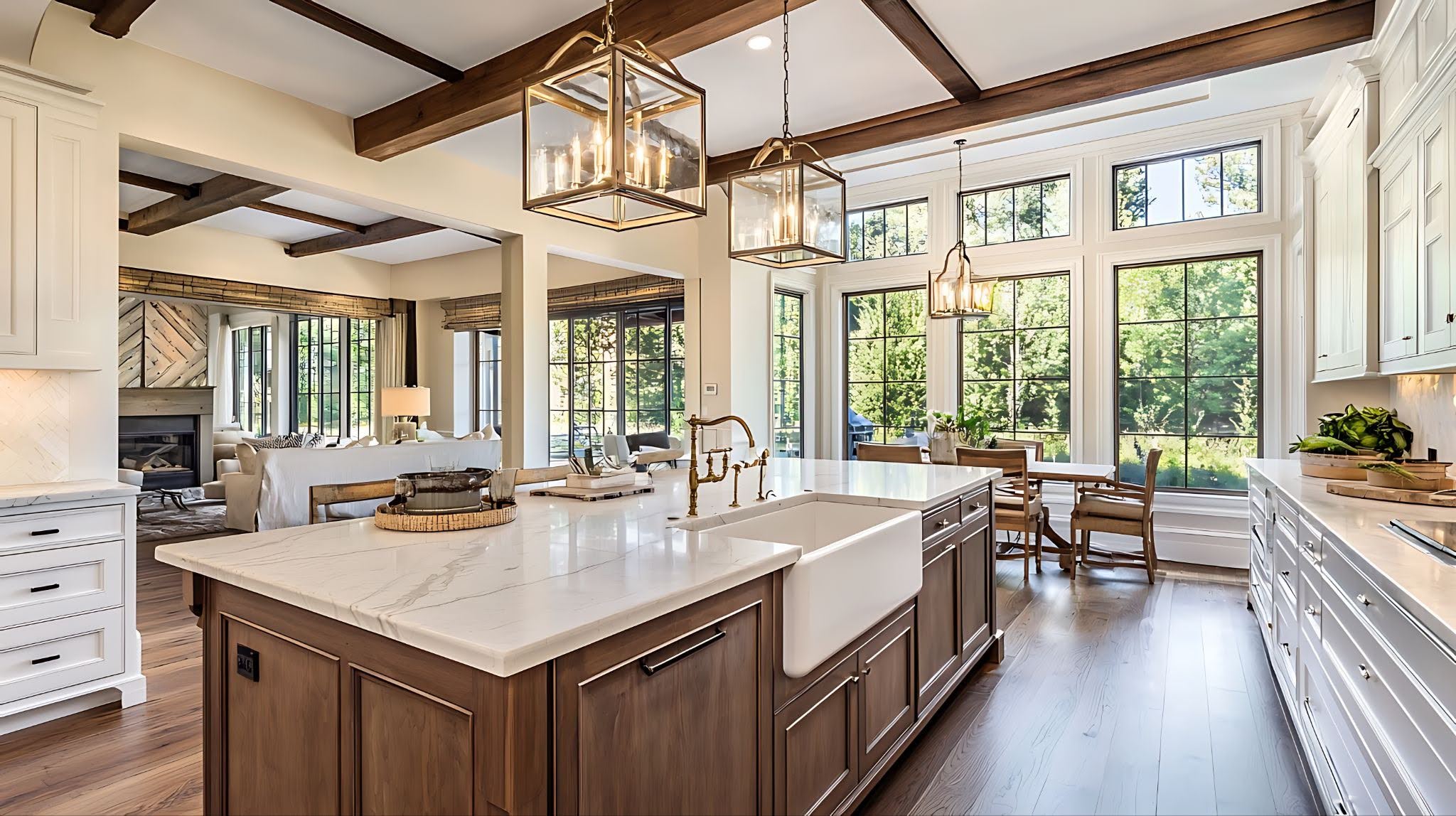
Upgrading your kitchen countertops is one of the most significant decisions you will make during a remodel. Countertops define the aesthetic of your kitchen while serving as the primary work surface for meal preparation, entertaining, and daily family life.
Two materials consistently dominate the market: natural granite and engineered quartz. Both offer strength, beauty, and long-term home value, but they behave differently under the daily demands of a Semmes kitchen. Understanding how each material performs in local conditions will help you choose the best fit for your lifestyle.
Granite: One-of-a-Kind Natural Beauty and Heat Resistance
Granite has been a top countertop choice for decades, and for good reason. Mined directly from natural stone quarries, every granite slab is a unique piece of earth-made art. No two kitchens with granite will ever look identical.
Key Advantages of Granite:
Natural Uniqueness: Granite features rich veining, mineral speckles, and depth that synthetic materials struggle to replicate perfectly.
Exceptional Heat Resistance: Granite is formed under extreme heat and pressure in nature. You can place hot pots or baking sheets directly on a granite surface without scorching or melting the stone.
UV Stability: If your kitchen receives direct sunlight from large windows—or if you are building an outdoor kitchen on your patio—granite will not fade or discolor from UV exposure.
Maintenance Considerations:
Because granite is a natural, porous stone, it requires periodic sealing (typically once every 1 to 2 years) to prevent liquids like red wine, coffee, or oil from penetrating the surface and leaving stains.
Quartz: Non-Porous Convenience and Consistent Styling
Engineered quartz countertops are crafted by combining roughly 90% natural ground quartz minerals with 10% polymer resins and pigments. The result is a non-porous, highly uniform surface designed for modern living.
Key Advantages of Quartz:
Zero Sealing Required: Because quartz is non-porous, it never needs to be sealed, polished, or reconditioned. It naturally resists bacteria, mold, and staining from household liquids.
Design Consistency: If you prefer predictable patterns or want a marble-look slab with crisp white backgrounds and clean gray veining, quartz delivers exact color consistency across multiple slabs.
Easy Cleanup: Daily cleanup requires nothing more than warm water, mild dish soap, and a soft cloth.
Maintenance Considerations:
Unlike granite, quartz resins can be damaged by extreme direct heat. Placing a screaming-hot pan straight from the oven onto a quartz countertop can cause thermal shock or leave a yellowed burn mark. Always use trivets or hot pads with quartz.
Making the Final Decision for Your Home
Choosing between granite and quartz comes down to your personal habits and styling preferences:
Choose Granite if you love authentic natural stone, prioritize heat tolerance, want a surface suitable for indoor/outdoor spaces, and don't mind quick periodic sealing.
Choose Quartz if you want a low-maintenance, stain-proof surface with consistent modern designs and zero routine sealing requirements.
Both countertop materials bring durability, charm, and value to your kitchen space.


